OEM-Approved Lubricants in Pakistan: Why It Matters for Automotive Workshops
In most motor vehicle workshops in Pakistan, engine issues are normally diagnosed when they have failed - when they start knocking, lose oil, overheat, or perform poorly. However, in practice, most of them start long before then, sometimes as the incorrect lubricant is put in the engine.
In an industry where workshops have minor hatchbacks, modern turbocharged SUVs, or imported cars, the selection of oils is no longer an issue and a routine affair. It is a technical decision that influences directly the engine life, customer satisfaction and even warranty claims. It is in this place where the OEM-approved lubricants are not optional any longer.
As the Pakistani automotive industry is increasingly experiencing technological advances in vehicles, workshops that do not consider the requirements in the OEM specifications are increasingly finding themselves in the midst of recurring failures and complaints coupled with unnecessary repair expenses.
What OEM-Approved Lubricants Actually Mean in Real Workshop Practice
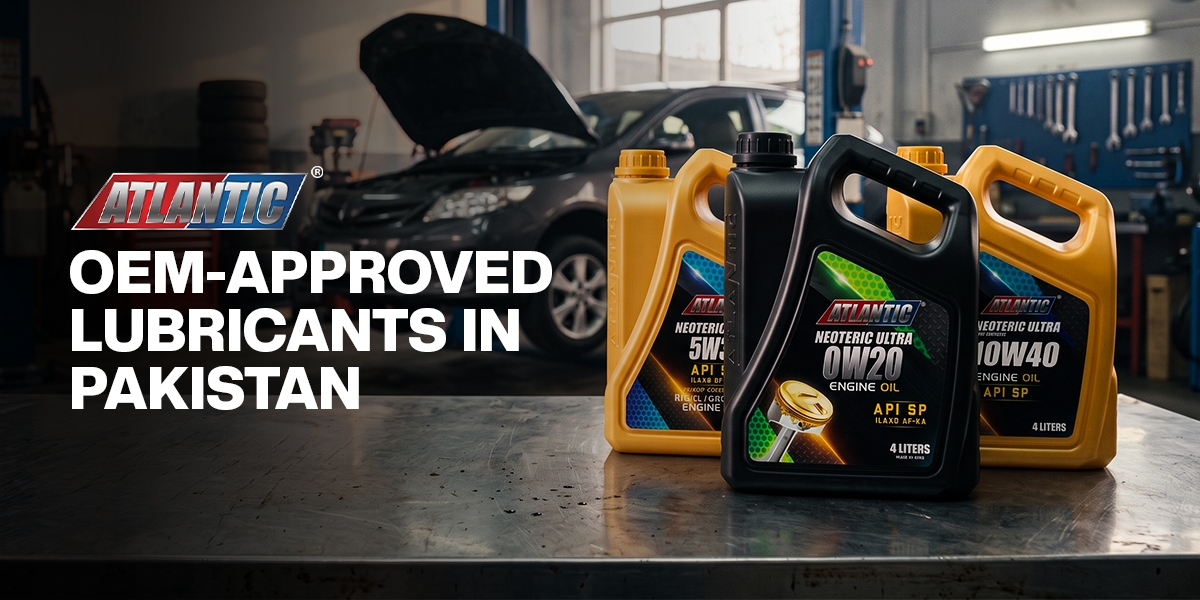
OEM approved lubricants are engine oils and greases that have been tested and approved by automobile manufacturers such as Toyota, Honda, Mercedes-Benz, BMW and many others. These certifications guarantee that the lubricant is of high-performance standards which are engine models specific.
Whether compared to general industry classifications, like API or ACEA, which are general performance standards, OEM approvals are more detailed. They validate lubricant behavior in real engines under real-world loads, such as heat load, friction behavior, deposit control, and long-term stability.
With workshops, this is translated into a single significant divergence and that is that instead of just assuming that the oil fits the engine system in terms of grade or viscosity, OEM approval means that the oil was designed to fit in that specific engine system.
Why OEM Approvals Are Becoming Critical in Pakistan’s Automotive Environment
The engines are subjected to a unique stress environment due to driving conditions in Pakistan. Additional pressures on engine oils include high temperatures in summer, dusty road conditions, congested urban traffic, and inconsistent fuel quality.
Under these conditions, generic lubricants tend to degrade more readily, lose viscosity stability, and be less effective at protecting internal components. This causes more wear on pistons, turbochargers, and valve systems.
OEM-approved lubricants are specifically designed and tested to withstand these stress conditions. They maintain consistent lubrication film integrity, oxidation resistance at high temperatures, and efficient engine operation over longer periods.
In the case of workshops, it translates straight away into fewer callbacks, fewer warranty issues, and increased customer trust.
Engine Protection: Where OEM-Approved Lubricants Make the Real Difference
Modern engines are designed with extremely tight tolerances. Turbocharged engines, direct-fuel-injection engines, and emission-control technologies demand lubricants that not only minimize friction but also serve additional functions.
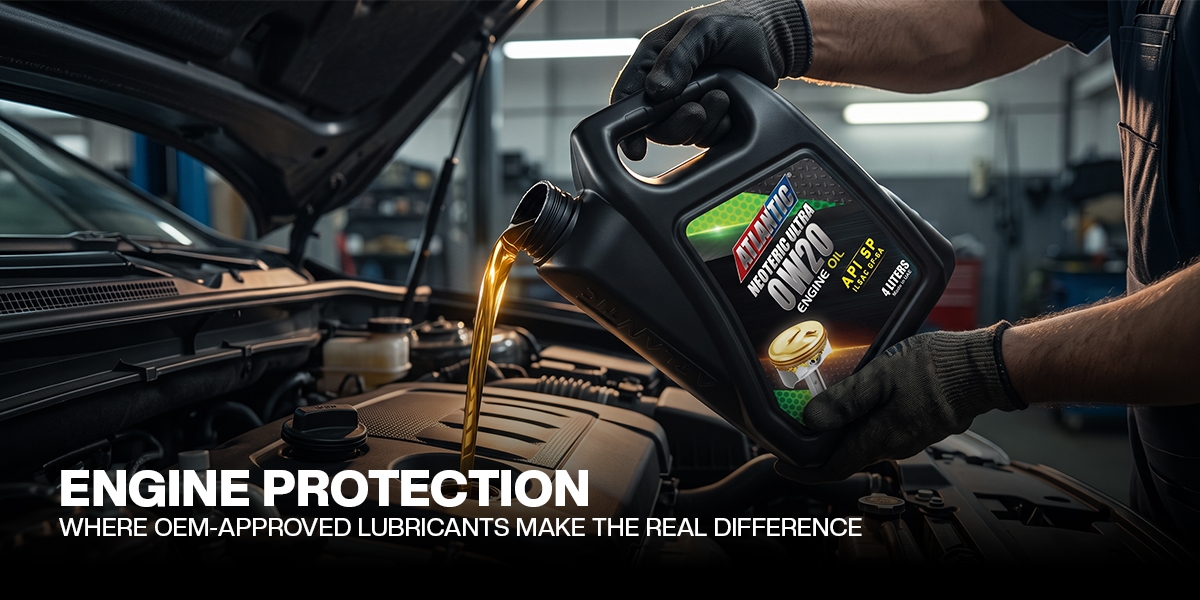
OEM-approved lubricants offer multi-layered engine protection through advanced additive systems. These include detergents that keep engine parts clean, dispersants that prevent sludge accumulation, anti-wear agents that protect metals, and viscosity modifiers that maintain consistent performance across varying temperatures.
This would translate to real-life benefits, including smooth engine operation, reduced carbon deposition, higher fuel efficiency, and a significant decrease in the risk of premature engine wear.
In the case of workshops, this protection is not hypothetical. It can be observed in decreased returns complaints and extended service periods.
Warranty Compliance: A Risk Workshops Cannot Afford to Ignore
Warranty protection is one of the most important and yet neglected factors of lubricant choice. Most modern or imported cars in Pakistan are still within the scope of manufacturer warranty.
In the majority of OEM warranties, it is very clear that only approved lubricants can be utilized during servicing. Warranty claims may be denied in case an engine is damaged due to the utilization of a non-approved oil.
This poses a threat to workshops directly. Although the repair may not be related to the quality of oil, the absence of records of compliance can transfer the responsibility onto the service provider.
By making them fully compatible with the requirements of manufacturers, OEM-approved lubricants remove this confusion. In the case of workshops, it is not merely a matter of technical compliance, it is risk management.
Understanding API, ACEA, and OEM Approvals Correctly
With API standards, the minimum performance of engine oils is outlined, primarily wear protection and sludge control. ACEA standards are further developed and are based on the European engine performance requirements and with more rigorous testing categories.
OEM approvals surpass the two. They include direct testing by car manufacturers of certain engine designs both in controlled and real-life conditions. Lubricants are only approved by OEM when they pass these tests set by the manufacturer.
In the case of workshops dealing with modern vehicles, API or ACEA ratings are no longer sufficient. OEM approval offers the utmost technical certainty.
Business Impact for Workshops and Fleet Operators
In business terms, the selection of lubricant has a direct impact on the profitability of the workshops. Recurring engine problems not only add to operational burdens but also ruin reputation.
Using OEM-approved lubricants in a workshop regularly will lower the chances of engine failure at an early stage, decrease the number of customer complaints and enhance long-term confidence. This is particularly significant in the competitive repair market in Pakistan, where word-of-mouth and repeat customers are the drivers of revenue.
It is also of great benefit for fleet operators. Less engine wear translates into less down time, less emergency repairs, and cost effectiveness in the miles per kilometer.
In both instances, the lubricant is not simply a consumable- it is a part of the service quality standard.
Why Reliable Lubricant Sourcing Matters as Much as Lubricant Selection
Although workshops are aware of the necessity of OEM approvals, there is one more problem: to find the real certified products in the market where fake or poor-quality oils still can be found.
The benefits of proper specifications may be totally offset by the use of untrustworthy lubricants. Even with proper labeling on the container, engines can still be damaged.
That is why it is as important to source from a trusted supplier as it is to select the appropriate specification. Reliability of the workshop is maintained by consistency, authenticity, and technical support.
Why Atlantic Grease and Lubricants Pakistan Stand Out
For workshop managers and fleet managers in Pakistan, a reliable partner in lubricants is crucial in ensuring the quality of service and stability in operations.
Atlantic Grease and Lubricants Pakistan offer OEM-approved lubricant solutions designed to meet the modern engine needs. Our products are also in line with international performance requirements like API and ACEA in addition to OEM-specific approvals of different international vehicle manufacturers.
This ensures that workshops can confidently service a wide range of vehicles—from local models to high-performance imported engines—without compromising on warranty compliance or engine protection.
Atlantic Grease and Lubricants Pakistan reduce uncertainty, enhance customer trust, as well as long-term business performance by ensuring a steady quality and dependable supply of products for the workshops.