Why Your Car's Engine Oil Turns Black Faster in Pakistan and What It Means
You check the dipstick on your car several days after changing the engine oil, and the fresh golden engine oil has already turned dark. This immediately raises concerns among many Pakistani drivers. Was the oil fake? Is the engine damaged? Were low-quality lubricants used by the mechanic? The reality is more realistic than scary. In Pakistan, engine oil tends to turn black sooner because your vehicle operates in more challenging conditions than most vehicles in colder, cleaner, and strictly controlled markets.
Dusty roads, excessive heat, traffic congestion, short routes, fuel quality in Pakistan, and diesel soot are factors in the country that affect the color and performance of engine oil. Black oil is not necessarily an indicator of failure; however, it can signal issues with combustion, contamination, or engine maintenance.
Understanding Engine Oil Color
New engine oil is typically amber, golden, or light brown, based on the formulation and additives. As it circulates through the engine, it picks up heat, carbon particles, traces of microscopic metal, fuel residues, and combustion by-products. As a result, the color of engine oil is bound to change over time.
Modern engine oils include detergent and dispersant additives. These additives are meant to clean internal engine components and suspend contaminants to prevent sludge formation. Thus, a darkening of engine oil may just indicate that the oil is performing its task. But when the oil becomes thick, gritty, burnt-smelling, or extremely black within a short period, it can be a sign of harsh driving conditions, inefficient fuel combustion, overdue service, or low-quality engine oil in Pakistan, which drivers should pay attention to.
Why Engine Oil Turns Black Faster in Pakistan
The environment in which Pakistan operates is challenging. Cities such as Lahore, Karachi, Faisalabad, Multan, Rawalpindi, and Peshawar are subjected to heat, dust, traffic jams, and stop-and-go traffic. These factors place stress on the engine and accelerate oil oxidation.
Ambient Temperature
The ambient temperatures are high, and this increases the workload of the engine cooling system. As oil is repeatedly heated, it slowly begins to disintegrate chemically. This is called oxidation, and it darkens the oil. During long summer traffic jams, particularly when the air conditioner is on and the engine is under a high thermal load, the car might be moving very slowly, but the engine will still be operating under a heavy thermal load.
Dust
Another significant factor is dust. Many roads in Pakistan are covered with airborne dust, construction debris, broken pavement, and unpaved shoulders. When the air filter is dirty, of poor quality, or improperly sealed, fine dust can enter the engine intake system. This contamination causes the oil to wear out and darken. Not even a good lubricant can perform well when the engine is constantly exposed to dust and poor filtration.
Traffic Patterns
Traffic patterns are important as well. Shorter trips, idling, and slow urban driving do not allow the engine to remain in optimal operating conditions for long enough. The crankcase may not be completely evacuated of moisture and fuel vapors. Over time, contaminants combine with engine oil, affecting its purity, viscosity, and protection properties.
The Role of Fuel Quality Pakistan Drivers Often Overlook
Issues of fuel quality in Pakistan can directly affect engine oil condition. The non-clean burning of fuel results in increased soot, carbon, and acidic by-products. These by-products enter the oil through a natural process called blow-by, as small amounts of combustion gases bypass the piston rings and enter the crankcase.
When the fuel is impure or not burning efficiently, the engine oil must cope with increased pollution. Consequently, the oil will darken earlier and can become inefficient earlier. Poor combustion may result from poor fuel quality, dirty injectors, weak spark plugs, clogged air filters, or an improper fuel-air mixture.
This is the reason why two cars that have used the same oil can have different colors of oil after covering the same number of miles. A single car can use cleaner fuel, use open roads, and be high in engine compression. The other can be stuck in traffic, burn uneconomically, and have a dirty air filter. Of course, the oil in the second car will darken quicker.
Why Diesel Engine Oil Turns Black So Quickly
Diesel engine oil normally becomes black relatively quicker than petrol engine oil. This is natural since diesel engines generate more soot during combustion. Diesel soot consists of minute carbon particles which get into the oil via blow-by. An excellent diesel engine oil is made in such a way that these soot particles are trapped and suspended in the oil so they do not form deposits.
The pickups, vans, SUVs, trucks, and commercial fleets used in Pakistan are typically under heavy loads, with lengthy idling times and dusty environments. All these cause diesel oil to darken rapidly. In most instances, the diesel engine oil may turn black after a few minutes of service, yet the oil has the capacity to protect the engine.
However, oil condition should not be ignored by diesel owners. When the oil turns unusually thick, the engine starts to drag, there is a higher rate of fuel consumption, or more smoke is produced, it might be time to examine injectors, air filtration, turbo, and proper engine oil change schedule.
Does Black Engine Oil Mean Your Engine Is Damaged?
Having black engine oil does not necessarily imply that something is wrong with your engine. Actually, a dark oil may signify that detergents are washing the engine and washing off contaminants from metal surfaces. This is part of normal lubricant function.
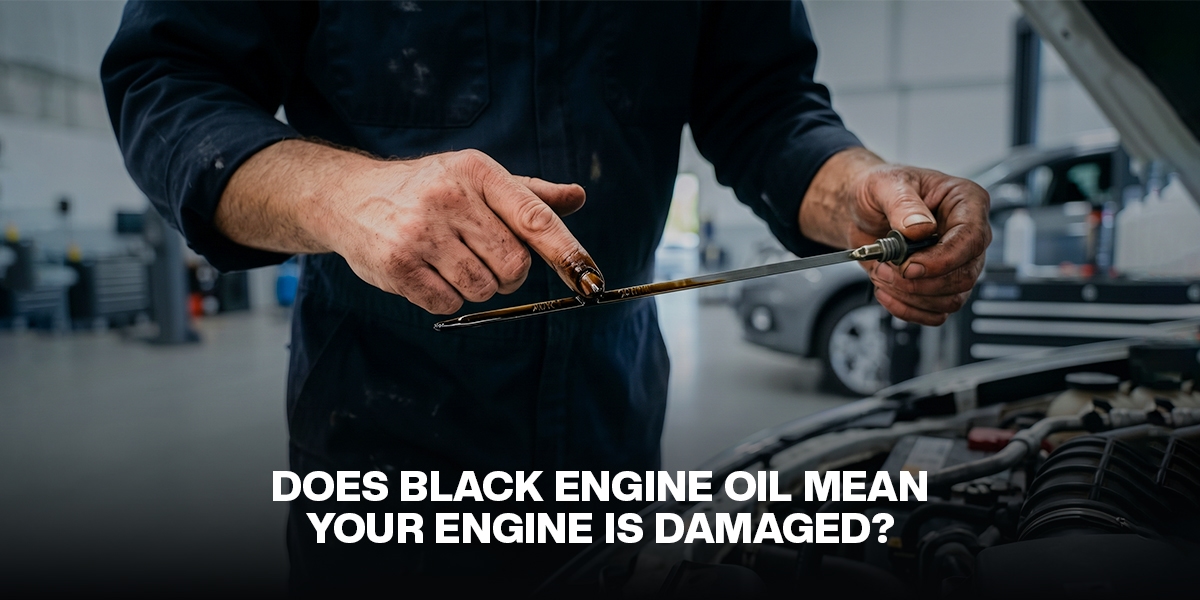
It is not color that matters. The texture, smell, level, and mileage along with driving conditions should be observed. When the black oil is still smooth between your fingers, and even though the vehicle is in the recommended service range, it might not be an emergency. Conversely, when the oil is gritty, smokes like burnt food, resembles sludge, or falls below the safe limit very fast, the engine needs your attention.
The abrupt shift in oil behavior may also serve as a red flag. As an illustration, when your car used to travel many thousands of kilometers with oil remaining brown but now it becomes very black in only a few hundred kilometers, it is possible that the engine is running rich, burning oil, it is poorly filtered, or there is internal wear.
Engine Oil Change Interval in Pakistani Conditions
Many drivers adhere to a standard engine oil change interval without considering the local circumstances. However, the heat, dust, traffic, and fuel fluctuation in Pakistan imply that service intervals must be chosen practically. The timing is determined by the type of oil, age of the vehicle, engine design, driving habits, and recommendations from the manufacturer.
Mineral oils tend to have shorter intervals since they more readily undergo oxidation at higher temperatures. Semi-synthetic oils are more stable, whereas fully synthetic oils are more resistant to heat, oxidation, and deposits. One of the key synthetic oil benefits is that it can maintain viscosity and cleanliness for longer under demanding conditions.
Even synthetic oil must not be carelessly stretched. When you are driving in heavy traffic, making short journeys, using dusty roads, or idling most of the time, then your engine is performing severe services. Regular inspection of oil and adherence to a maintenance schedule appropriate to Pakistani roads is more appropriate in such situations than depending on the recommendations based on ideal conditions.
How to Monitor Engine Oil Properly
Engine oil is easy to check; however, one must do it properly. Park the car on a flat place, turn off the engine, and wait a few minutes to allow the oil to settle in the sump. Insert the dipstick, wipe it, reinsert it, and check the level and appearance.
The level of healthy oil must remain within the minimum and maximum marks. When the level is low, the engine could be burning oil or leaking. When the oil is a milky-looking substance, there is the possibility that it is mixed with coolant. When it smells heavily of fuel, there is a chance that excess fuel is pouring into the crankcase. If its feel is gritty or sticky, it may have contamination or sludge.
The color of engine oil is a helpful factor, but not the only one that should be taken into consideration. Add color and mileage, service history, quality of oil, and the feel of the vehicle during driving. When the lubrication system is working well, the starting is smooth, the performance is steady, the temperature is normal, and the fuel economy is also consistent.
Choosing Better Lubricants for Pakistani Roads
Good oil will not improve the environment, but will ensure that the engine is better protected in harsh conditions. A good lubricant is resistant to heat, sludge, and wear, and holds the contaminants in suspension till the next time it is changed. This is the reason why the lubricant suggestions for Pakistan must be limited to the actual goods, appropriate viscosity level, and compliance with the specifications of the vehicle manufacturer.
In the case of older engines, high-mileage oils can be beneficial in terms of seal conditioning and oil consumption. In the case of modern petrol engines, the right synthetic or semi-synthetic oil has the ability to enhance protection in cold starts and hot traffic. In the case of a diesel engine, it is important to always use diesel engine oil that fits the required performance category as well as the soot-handling needs.
It is equally important to purchase a product from a reputable supplier as the grade. Fake or low-quality oil may wear out due to easy breakdown and formation of deposits. To ensure good engine protection, Pakistani automobile owners have the option of good lubricants available at Atlantic Grease and Lubricants Pakistan. Our product line facilitates the maintenance of engines, smooths performance, and relies on protection as per local driving conditions. When your car, van, pickup, or commercial vehicle is used in the Pakistani heat and traffic, then the choice of the right lubricant from Atlantic Grease and Lubricants Pakistan is a practical step towards your long engine life.
Final Thoughts
The quickness of engine oil turning black in Pakistan is commonly due to heat, dust, traffic, quality of fuel, and by-products of combustion. Does not necessarily imply the oil is bad or the engine is failing. Dark oil, in most instances, implies that the lubricant is cleaning the engine and holding contaminants in a proper way.
However, black oil is to be observed as well. If it appears too early, smells burnt, is viscous, and is accompanied by engine noise, smoke, overheating, and poor performance, the car must be checked. The simplest method works best: use good-quality oil, maintain a realistic service interval for engine oil changes, keep the air filter clean, purchase fuel at reputable outlets, and regularly check the state of the oil.
When properly maintained with good engine habits and reliable lubricants, your car will be better equipped to deal with the challenging roads of Pakistan with greater protection, smoother operation and longer engine life.